Opinion
Durham's regional chair will no longer carry a mandate from voters across the region. That democratic loss matters especially when the office is gaining stronger powers over budgets, staffing and the choices behind household tax bills.
The Region confirmed Kevin Ashe's appointment on November 10, with his 2026–2030 term beginning November 15. Pickering's announcement confirms he will remain mayor while taking on the regional role and receive only one salary.
Ashe is therefore not a politician whom no Durham resident elected. He is Pickering's mayor. The issue is that the regional chair appointment does not give residents of the other Durham municipalities the direct say they previously had over that office.
Durham residents have already spoken
Durham's official election archive records public chair elections in 2014, 2018 and 2022. John Henry, whom Ashe replaces, was elected chair in the latter two contests.
The Region also sought feedback on the new appointment system. Its June survey update reports that 92.4 per cent of 1,311 participants supported an elected chair. This was a voluntary engagement exercise, not a statistically representative poll of the whole region. It nevertheless put a clear objection from participating residents before council and the province.
From November 15, the strong-head-of-council framework will give the chair greater control over budgets and some senior staffing decisions. It also permits written directions to staff. Statutory limits protect specified offices; this is not a licence to dismiss every public official.
Certain by-laws that the chair believes could advance prescribed provincial priorities can pass with support from more than one-third of all council members. That is a special rule for qualifying by-laws, not a general replacement for majority voting.
Budget amendments follow a separate process. Council can amend the chair's proposed budget, but the chair can veto amendments. Restoring an amendment after a veto requires support from two-thirds of all council members. The Municipal Act also gives the minister power to remove and replace an appointed regional head.
The transition regulation requires the post-election 2027 budget to be proposed in 2027.
That is why replacing a region-wide election is more than a change in recruitment. Voters lose a direct way to remove the person proposing the regional budget, while councillors face a higher threshold when trying to restore an amendment that person rejects.
Ashe still faces the electoral accountability of his mayoral role. It would be wrong to erase that. It would be equally wrong to treat a Pickering mandate as the same thing as a chair mandate from the entire region.
Households need clear spending explanations
The approved 2025 budget raised the regional amount by 7.4 per cent, including 4.4 percentage points for police.
The 2026 budget announcement reports a 4.8 per cent increase: about $14 more monthly for an average homeowner, approximately $10 for police and $4 for other regional services. These are regional figures, not the complete increase after local municipal and education charges. Police's share of the regional tax increase is also different from the percentage increase in the police budget.
Residents deserve an explanation of the services and measurable outcomes behind those increases. That does not mean every increase is wasteful. It means affordability should be demonstrated through choices and results, rather than asserted in a budget announcement.
Compensation needs the same precision. Ontario's 2025 disclosure lists outgoing chair Henry's salary at $244,417.45 and taxable benefits at $1,483.86, totalling $245,901.31. Those historical amounts do not establish Ashe's new pay. Pickering's one-salary commitment should be followed by a clear public explanation of the amount and how costs are allocated.
A stronger office needs a stronger public test
Ontario presents stronger chairs as a way to advance housing and infrastructure and improve decision-making. Durham residents can support those goals while questioning the removal of their region-wide vote.
The incoming chair should publish clear budget choices, explain vetoes and show what residents receive for their money. Councillors should use their remaining powers visibly. Queen's Park should explain why removing the direct mandate will improve on a system residents were able to judge at the ballot box.
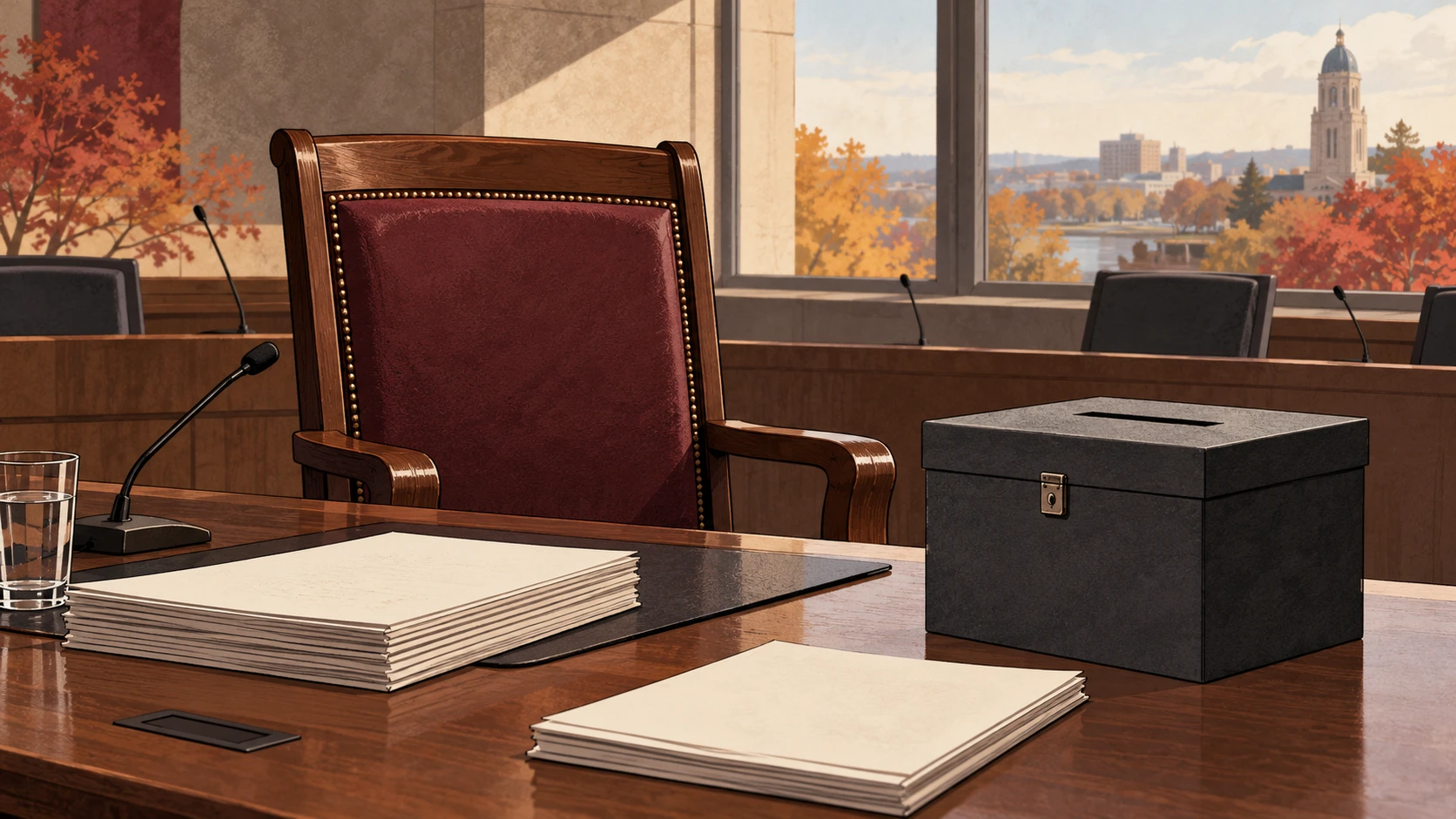
Feature image: AI-generated conceptual illustration, not a photograph of an actual council chamber, person or event.